
The Makgadikgadi Pans is situated in the central region of the country and covers approximate 12 000 sq km and is the largest salt pans in the world.
These are the remains of a great lake that once covered most of northern Botswana, fed by rivers carrying salts filtered from the lake's catchment area. Because the basin had no outlet, the salts were concentrated in low lying areas. Less than 10,000 years ago, climactic changes caused the lake to evaporate, leaving only salt deposits, creating the wonderous area we now know as the Makgadikgadi Pans..
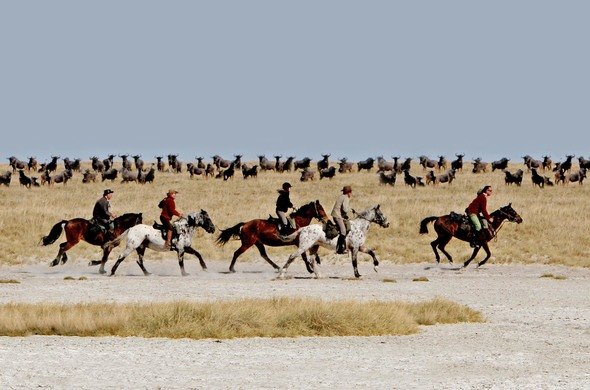
Features to look for: zebras, blue wildebeest, variety of bird species, hyenas, suricates, aardvarks, oryz, eland, caracal and red hartebeest.
After the rains, from April to November, herds of zebra and blue wildebeest migrate westwards to the Boteti River, creating one of the biggest migration spectacles in Africa. Temperatures during this time are warm and pleasant during the day, but mightily cold at night.